- Today's Ajenda
- Posts
- TODAY'S AJENDA #93
TODAY'S AJENDA #93
Welcome to TODAY'S AJENDA!


If I got a dollar every time someone asked me about creatine, I’d have enough money to buy a lifetime supply (and still have change left over!). Creatine isn’t new. A French chemist discovered it in 1832, and in the nearly 200 years since, it’s become one of the most studied supplements in the world.
There is an incredible amount of peer-reviewed data showing that creatine is both safe and effective. That said? It’s still an area of massive interest. Out of the hundreds of questions I get about creatine, here are the five that come up the most.
Short answer: Yes. Creatine is safe for women over 50. However, any time you talk about something that is safe or effective, you should ask yourself: “At what dose?”
Zoom In: The standard dose of creatine is 3-5 grams for both men and women.
At this dose, research consistently shows no kidney harm in healthy individuals. The “kidney fear” comes from a misunderstanding of the term creatinine (a waste product measured in blood tests to check kidney function).
Taking creatine naturally raises creatinine levels slightly because your body is processing the supplement. Higher levels of creatinine are typically a byproduct of metabolism, not a sign of organ damage.
However, we lack long-term data in women with existing kidney disease (or those on meds that affect kidney function). If that’s you, talk with your physician.
Creatine pulls water into your muscles. Due to this “water shift,” you may notice the scale increase slightly, especially if you undergo a loading phase (20 grams per day for 5-7 days).
Zoom In: This weight isn’t fat. It’s water supporting muscle function. If you stop supplementing, you should lose that water weight within a few weeks.
Not everyone will notice a difference. Some women will see zero change. Others experience a 2-3 pound jump. It depends on your body!
I’ll be honest with you: Creatine works best with training/weightlifting.
A 2021 review found that post-menopausal women who combined creatine (5 grams daily) with resistance training saw significant gains in muscle mass and strength.
While that same review found that high-dose loading (20 grams for 7 days) without exercise showed some improvement in strength, the results were modest and inconsistent.
Translation: Creatine works best to increase lean muscle mass, strength, and bone density IF combined with resistance training and weightlifting exercise.
Short answer: No. Timing doesn’t matter. Consistency does.
Studies comparing pre- versus post-workout dosing generally show similar results over time. The best “time” to take creatine is whatever time you’ll remember to do it daily.
Personally? I take creatine every day, and so does my husband. I’ll have it in my 3C Smoothie (chocolate, creatine, and coffee!) or Banana Collagen Smoothie.
Let’s clear these up:
Caffeine: Caffeine does not “cancel out” creatine. A 2015 study found they work differently: Creatine improves power for short bursts, while caffeine shines for endurance.
Cancer: Studies show no link between creatine at standard doses and cancer risk. In fact, dietary creatine intake (so from food, not supplements) was associated with lower cancer risk.
Hair Loss: A review of more than 500 peer-reviewed studies done by the National Institutes of Health (NIH) did not find a link between creatine and hair loss.
Bottom line: Creatine is one of the most researched supplements on the planet. In my opinion, the benefits of taking 3-5 grams a day outweigh the risks. It’s a staple in my routine, and science backs it up.
The 6th most common question I get? My favorite brand of creatine.
I actually covered this in an earlier edition of my paid newsletter, Off Duty. Subscribe below to see which product made the cut and get my frank, friend-to-friend, rundown on what I’m using, reading, and focusing on!
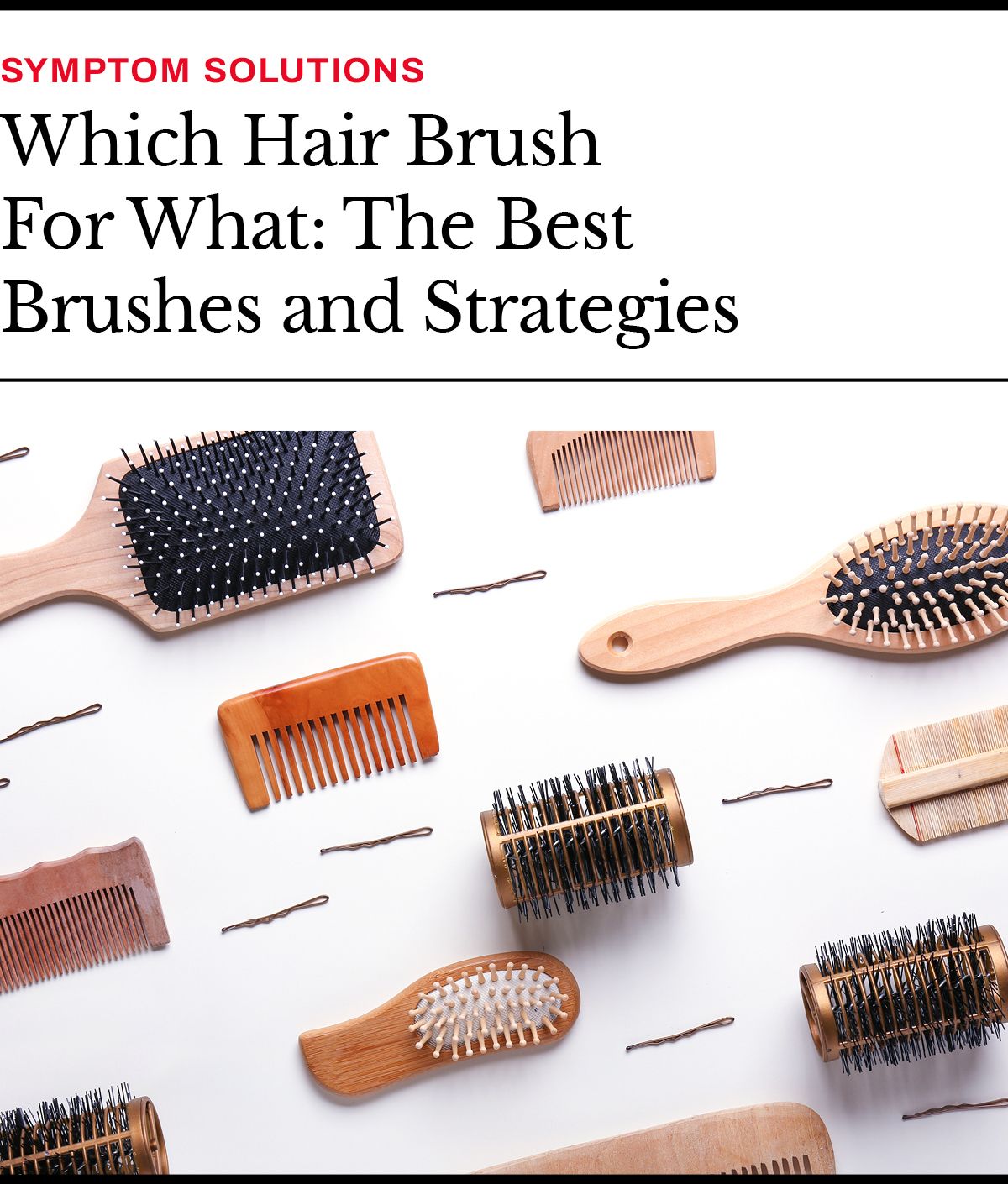
From boar bristle to paddle to vent to teasing, the list of brushes is endless. But you don’t need a specialized tool for every square inch of your head. Which is a relief, because we women over 50 already navigate a slew of hair issues.
Zoom In: Hair loss or thinning affects 50% of women over 40 (and it can certainly happen well before that, too). I’m one of them.
The reality is you only really need 2-3 brushes, and how you use them matters as much as which one you use. As someone who has experienced the saga of thinning hair post-menopause, here’s what you should know:
Which Brush For What? A Simple Guide:
Wide-Tooth Comb or Flexible-Bristle Brush
This is the brush you’ll want if you notice more hair in the shower drain or on your brush than usual. Typically, you’ll notice hair falling after an illness, a period of intense stress, postpartum, or a hormonal shift.
Wide-tooth combs have gaps that let hair glide through without snagging, while flexible bristles bend with your hair instead of pulling against it. Both minimize tension on fragile strands, which is key when your follicles are already in overdrive shedding mode.
Boar Bristle or Mixed Bristle Brushes
Does your hair feel wiry and dull…but it isn’t necessarily falling out in clumps? Then your goal is oil distribution. Boar bristle or mixed bristle come in handy here, as they’ll help distribute oil from your scalp down to your hair shaft.
How it works: Boar bristles are similar to human hair (both are made of keratin), and can easily pick up and move oil. Just be sure to wash your brush frequently to prevent oil or residue buildup.
Silicon Scalp Massager
Scalp care is key. Letting oil or sebum build up on your scalp triggers inflammation, which can be deadly for hair health. I like using a silicone scalp massager, but massaging with your fingertips works too!
What about When Hair is Wet?
Don’t brush or comb wet hair…ever. When your hair is wet (and that includes applying leave-in products), it stretches up to 30% of its length, and the hydrogen bonds that give hair its structure are temporarily weaker.
Towel dry, then air dry for as long or as often as possible. And if you must brush it, use a detangling brush designed for wet hair.
After trying countless techniques and products, I always come back to these brushing basics: a wide-tooth comb when shedding, boar bristle when my hair is feeling dry, a silicon scalp massager for general hair health, and to never brush wet hair.
Will it give me J Lo hair? No. I’ll never have celebrity-level hair. But these simple habits keep my hair healthy and strong, and right now, that’s enough.


Subscribe to my paid newsletter, Off Duty, where I step away from the doctor’s desk and television sets and share the info from my real life that nobody else has access to.

Did you enjoy Today’s Ajenda? It would mean the world if you left us a testimonial!


ABOUT DR. JEN
In her former roles as chief medical correspondent for ABC News and on-air cohost of “GMA3: What You Need to Know,” Dr. Jennifer Ashton—”Dr. Jen”—has shared the latest health news and information with millions of viewers nationwide. As an OB-GYN, nutritionist, and board-certified obesity medicine specialist, she is passionate about promoting optimal health for “the whole woman.” She has authored several books, including the national best-seller, The Self-Care Solution: A Year of Becoming Happier, Healthier & Fitter—One Month at a Time. And she has gone through menopause…
Forwarded this email?

Missed the last issue?

*Note: This newsletter includes affiliate links. Sponsors may earn a commission if you purchase.

This material is provided solely for informational purposes and is not providing or undertaking to provide any medical, nutritional, behavioral or other advice or recommendation in or by virtue of this material. This newsletter is for general informational purposes only and does not constitute the practice of medicine, nursing or other professional health care services, including the giving of medical advice, and no doctor/patient relationship is formed. The use of information on this newsletter or materials linked from this newsletter is at the user’s own risk. The content of this newsletter is not intended to be a substitute for professional medical advice, diagnosis, or treatment. Users should not disregard, or delay in obtaining, medical advice for any medical condition they may have, and should seek the assistance of their health care professionals for any such conditions.